We are excited to share that Nick Couldry (London School of Economics and Political Science), Beata Megyezi (Stockholm University) and Pille Pruulmann-Vengerfeldt (Malmö University) will join us as keynote speakers at DHNB2027!
 Nick Couldry is a sociologist of media and culture. He is Professor of Media Communications and Social Theory Emeritus at the London School of Economics and Political Science, and since 2017 a Faculty Associate at Harvard’s Berkman Klein Center for Internet and Society. He is the author or editor of eighteen books including Data Grab, Chicago University Press 2024, and The Costs of Connection, Stanford University Press 2019 (both with Ulises Mejias), The Mediated Construction of Reality (with Andreas Hepp, Polity, 2016), and Media, Society, World (Polity 2012). His latest books are The Space of the World: Can Human Solidarity Survive Social Media and What if it Can’t? (Polity, 2024) and Predatory AI: How We Can Resist Corporate Capture of the Human Mind (Polity, mid November 2026). Nick is a co-founder of the Tierra Común network of scholars and activists (https://www.tierracomun.net/ ), ICA Fellow, Fellow of the British Academy, and recipient of the 2025 Dallas Smythe Award from the Union of Democratic Communications.
Title: “Predatory AI: How We Can Resist Corporate Capture of the Human Mind”
Abstract: “Drawing on the author’s new book, Predatory AI: How We Can Resist Corporate Capture of the Human Mind (Polity), this lecture will challenge grand hopes for how AI will expand the global economy and transform human potential to ask what AI is sociologically. The lecturewill consider the impacts of today’s emerging social contract with AI for workplaces, education, and creativity, and the potential impacts of widespread AI adoption on the institutional fabric of capitalist societies. As societies, we may be entering into completely the wrong social contract with AI, but why? One reason is a major contradiction within capitalism which always requires AI’s use for economic ends, so blinding us to the social costs, however high. Another reason is that, for four centuries since Descartes, we have tended to overvalue disembodied intelligence and undervalue our own embodied intelligence: as a result, we find it difficult to ‘answer back’ when business forces tell us we must adapt to a commercially driven AI future that is already written. The lecture will end by considering how we can develop a new philosophical and social perspective on AI, and so confront one of the greatest social challenges of our time: how to develop AI for social good, not in a ‘predatory’ way, but in the most productive way for society.”
Read more: https://www.nickcouldry.org/
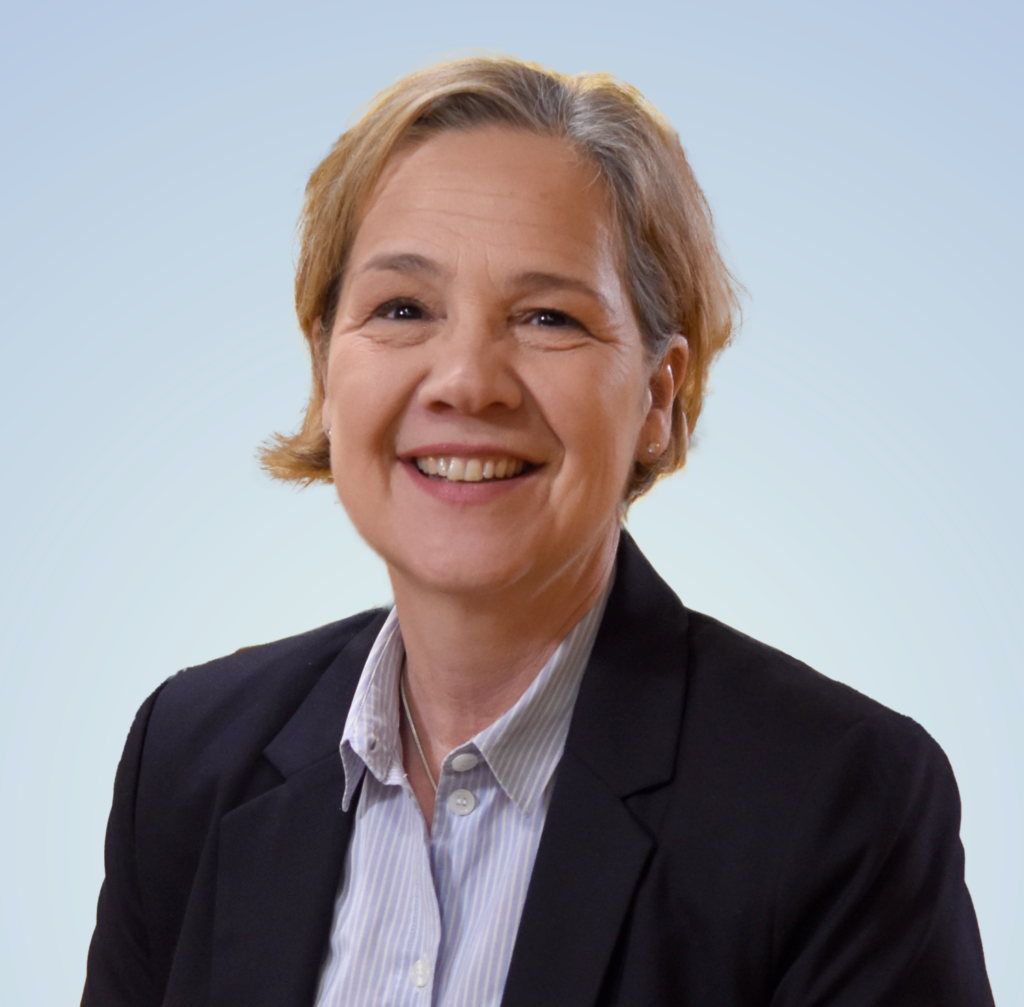 Beáta Megyesi is Professor of Computational Linguistics at Stockholm University. She earned her Ph.D. from the Royal Institute of Technology (KTH) and served as associate and full professor at Uppsala University. She has led numerous externally funded research initiatives and is Principal Investigator of DECRYPT (Swedish Research Council, 2018–2024) and DESCRYPT (Riksbankens Jubileumsfond, 2025–2032), projects that advance computational methods and research infrastructures for historical cryptology and the automatic analysis of rare scripts.
Title: “Reading the Unreadable: AI and Rare Scripts”
Abstract: “This talk explores how AI can support the analysis of rare scripts and historical texts, from handwritten documents to large-scale text collections. Drawing on research in automatic transcription, historical document analysis, and grammatical analysis of large textual datasets, it shows how computational methods can make complex sources more accessible for humanities and social science research. The talk also addresses the need for humanistic expertise and critical judgment when interpreting historical material through AI.”
Read more about Beáta.
 Pille Pruulmann-Vengerfeldt is a Professor in Media and Communication at Malmö University, Sweden and a visiting researcher at the Estonian National Museum. She is a member of Academia Europaea, section Film, Media and Visual Studies and the president of the European Communication Research and Education Association (ECREA). She often conducts her research in collaboration with practitioners to understand issues related to the datafication of media audiences, the impact of cultural industries, and data work in museums. She is keen to explore the potential of reflexivity, creative methods, and monsters in knowledge creation.
Title: Monsters in the loop
Abstract: In this talk, I will use the figure of the monster, its cultural body, and its desirable and fearsome characteristics to investigate what is in the loop, together with technologies, humans and the humanities. Using the monster figure as a starting point to investigate the conditionsof digital humanities, the presentation will be a collage and reflection of the conference’s theme. I will present monsters in the loop through the following theses (Harvard Maare et al, 2026): one, monsters are already inside; two, monsters can’t be petted; three, monsters aredemonstrated; four, monsters can be sided with; five, monsters can be invited to tea. Through these five ideas, I will explore the discussions and connections made at the conference and argue why monsters in the loop are both desired and feared.
Read more about Pille.