We are excited to share that Bolette Sandford Pedersen (University of Copenhagen), Mike Kestemont (University of Antwerp), Folgert Karsdorp (Meertens Institute, KNAW), and Katherine Bode (Australian National University) will join us as keynote speakers at DHNB 2026.
Bolette Sandford Pedersen is a professor in language technology and computational linguistics. She is particularly focused on the development of Danish resources for language technology and the language-centric AI. She leads the Centre for Language Technology.
Title: “Culture-Awareness in Large Language Models: Metaphors as a Cultural Marker.”
Abstract: Metaphors have been studied with great interest in linguistic theory for decades. They are considered an essential figure of speech, closely related to our cognitive system as well as to our culture. Lakoff and Johnson (in Metaphors we live by, 1980) state that the most fundamental values in a culture will be coherent with the metaphorical structure of the most fundamental concepts in the culture. With current advanced chatbots, using metaphors in communication is, however, no longer exclusive to humans. Recent Large Language Models (LLMs) are capable of both generating and analysing metaphors, although with limited precision and with a strong language bias, mostly towards English.
We present a study of Danish metaphors where we evaluate LLM-generated metaphor interpretations and show that current LLMs have much more success in explaining metaphors that are cross-cultural than those that are specific to the Danish language community. In particular, the sentiment of the culture-specific metaphors is very often skewed by the models. We claim that this colouring towards English poses a serious problem in the era of LLMs with regards to developing and maintaining cultural and linguistic diversity in low- and medium-resourced languages, such as the Nordic and Baltic ones. To this end, we present a new Danish metaphor benchmark, and argue that large-scale, monolingually-based benchmarking is a first step towards identifying and remedying these cultural deficits of LLMs.

https://researchprofiles.ku.dk/en/persons/bolette-sandford-pedersen/
Mike Kestemont & Folgert Karsdorp
Title: Forgotten knights, missing sailors, and hidden translations: the abundance of what was lost
Abstract: Researchers of the past — whether historians, literary scholars or archaeologists — depend on the sources that have stood the test of time. Needless to say, that sample of history is usually far from complete. There are numerous reasons for this, such as natural causes (fires or floods), decisions at the level of archival policy (what do we preserve and what do we not?), and biases in the formation of the archives themselves. Data representing lower classes were long considered less relevant, for example, and thus socioeconomic factors likewise play a role in the survival of sources. In a series of recent studies, we have explored how statistical methods from ecology can help us identify such gaps and biases in our knowledge. Those methods all find their basis in “Unseen Species Models,” which were originally developed to estimate the number of unique species in an environment. Just as ecologists try to estimate biodiversity from an incomplete sample, we apply the models to incomplete historical archives to measure the actual cultural diversity. In this talk, we apply unseen species models to four cases. First, we show how these methods can tell us something about the forgotten medieval chivalric literature in Western Europe. Extending this work, we then show how an estimator for shared diversity reveals the degree to which stories were exchanged across linguistic communities. We then apply the method to the historical archives of the Dutch East India Company, to map out the size of its workforce. Finally, we explore a generalization of the unseen species model with which co-variates of loss or absence can be mapped. We apply this extension to a dataset from historical criminology: the police registers of the Amigo prison (1879-1880) in Brussels, and show how the models can give us an estimate of the ‘dark number’ of unapprehended perpetrators as well as the demographic composition of this group.
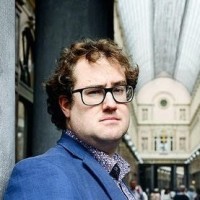
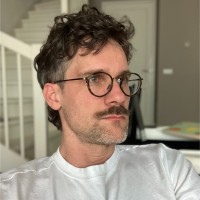
https://mikekestemont.github.io/
Folgert Karsdorp is a senior researcher and head of the Ethnology & Oral Culture research group at the Meertens Institute of the Royal Netherlands Academy of Arts and Sciences, and holds an endowed professorship in Computational Methods for the Study of Cultural Change at Utrecht University. His research addresses fundamental questions about how culture spreads, develops, and disappears, drawing on computational and quantitative methods from ecology, population genetics, and machine learning, with particular attention to methodological challenges in analyzing biased historical collections and measuring cultural diversity and loss.
Katherine Bode is a leading scholar in digital and computational literary studies, and a Fellow of the Australian Academy of the Humanities. Her research has transformed how large-scale digital collections – particularly newspaper fiction – can be used to reframe literary history, reading practices, and cultural reception. Through her pioneering scholarship, Bode has played a central role in advancing the digital humanities, offering new ways to connect literary scholarship with the possibilities of computational analysis.
Title: Lost in Abundance? Newspaper Fiction, Infrastructural Affordances, and the Non-Canonical
Abstract: This presentation explores abundance not simply as a condition of excess or a matter of scale, but as an infrastructural formation, a historical pattern of circulation, and an emerging probabilistic condition. Drawing on the creation and development of To Be Continued: The Australian Newspaper Fiction Database, I examine how paratextual conventions and digitisation infrastructures shape our encounters with the abundant materials of literary history. Turning to what these systems make visible, I show that the fiction often assumed to be marginal or obsolete in late nineteenth- and early twentieth-century Australia circulated extensively in Australian newspapers through patterns of reuse and syndication. Abundance here is patterned rather than chaotic, creating alternative contours for literary history and challenging book-centred narratives of value and decline. I conclude by reflecting on how abundance takes new form within contemporary language modelling, where textual corpora become probabilistic architectures rather than stable aggregates. Across digital infrastructures, print cultural systems, and computational domains, digital humanities does not merely navigate — or get lost in — abundance. It participates in structuring the conditions under which abundance becomes visible, interpretable, and evidentiary.
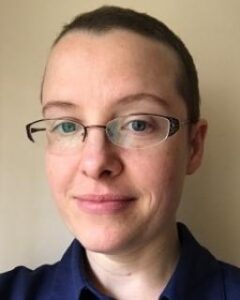
https://researchportalplus.anu.edu.au/en/persons/katherine-bode/