In March 2016 the first DHN conference met in Oslo. Ten years on, the association has gained a Baltic dimension, opened its activities to the arts, and seen digital methods move from the margins of humanities research into its core.
We are marking the anniversary with a seminar that looks forward rather than back. Three short provocations ask where humanities research is heading — here in the Nordic-Baltic region, and in relation to work being done well beyond it. The tools, the funding landscape and the public standing of the humanities all look different from 2016. Where does that leave a regional network like DHNB?
The seminar opens with a brief retrospective on ten years of DHNB conferences and closes with an invitation to DHNB 2027 in Umeå.
Open to all, no registration required.
Place: Online at Zoom
Time: Thursday 24 September 2026 at 13.30 to 15.00 CEST (11.30 in Reykjavík, 13.30 in Oslo, Copenhagen and Stockholm, 14.30 in Helsinki, Tallinn, Riga and Vilnius).
Chair: Eiríkur Smári Sigurðarson, Centre for Digital Humanities and Arts, University of Iceland
Agenda (times CEST):
- 13.30: Opening
- 13.35: Ten years of DHNB conferences: Hongyi Liu, Matti La Mela and Mats Fridlund
- 13.50: Provocation one: Alexander Refsum Jensenius
- 14.00: Provocation two: Anda Baklāne
- 14.10: Provocation three: Chen Jing
- 14.20: Discussion with all speakers.
- 14.45: DHNB 2027 in Umeå: Evelina Liliequist
- 15.00: End of seminar
If the seminar leaves you wanting to take part, you can join DHNB or renew your membership here, and the call for papers for DHNB 2027 in Umeå is now open.
The speakers:
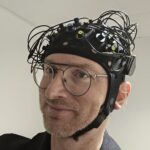
Alexander Refsum Jensenius Professor of Music Technology at the University of Oslo, Director of RITMO, head of the fourMs Lab and Director of the MishMash Centre for AI and Creativity — a national centre, funded by the Research Council of Norway, that investigates the meeting point between AI and creativity and involves a large part of Norway’s creative and performing arts community. A music researcher and research musician, he has worked on the body motion of musicians, dancers and listeners, and on human micromotion. He is the author of Sound Actions and Still Standing, and editor of A NIME Reader and Sonic Design. He also participated in the first DHN conference in Oslo in 2016.
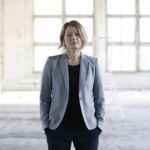
Anda Baklāne Head of Digital Research Services at the National Library of Latvia, a literary critic and digital humanities practitioner. Her work on digital research projects develops approaches for systematising literary corpora, interpreting textual data and opening new avenues for research in the humanities. Her current studies analyse urbanisation and modernisation in Latvian novels. She also teaches literary theory and introductory digital humanities at the University of Latvia, and coordinates the Baltic Summer School of Digital Humanities.

Chen Jing (CJ Chen) Associate Professor at the School of Arts, Nanjing University, and a founding member of the university’s Innovation Center for Digital Humanities Research. She is Secretary-General of the Digital Humanities Committee of the Chinese Society of Literary Theory. Her research spans digital humanities, digital art and heritage, and culture and media studies, with particular attention to how digital technologies transform artistic production, cultural understanding and the creation of knowledge. Her projects have explored the Grand Canal, Nanjing’s intangible cultural heritage, historical advertising archives and the digital mapping of historic Chinese cities.
Hongyi Liu …

Matti La Mela Associate Professor (docent) in Digital Humanities and Associate Senior Lecturer at the Department of ALM, Uppsala University, and a member of the DHNB board. His research covers the history of property, patents and access rights in the European periphery, and the creation and use of historical parliamentary data.

Mats Fridlund Deputy Director of the Gothenburg Research Infrastructure in Digital Humanities (GRIDH) and researcher at the Department of Literature, History of Ideas and Religion, University of Gothenburg. He is Associate Professor of History of Science and Ideas at Gothenburg and Associate Professor in Digital History at the University of Turku, and studies the politics and culture of modern science and technology, with a focus on the technologies of terrorism.
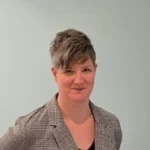
Evelina Liliequist Senior Lecturer in Digital Humanities at Umeå University, with a doctorate in ethnology, and since 2025 Deputy Director of Humlab. Her research covers digital practices, digital ethnography, internet history and queer perspectives. She is part of the team hosting DHNB 2027 at Umeå University on 1–5 March 2027, on the theme Human(ities) in the Loop.